The digital clock on the microwave glowed 3:14 AM. David, a fifty-five-year-old African American man with silver threading his beard, sat in the dark of his living room. He was waiting for the familiar, heavy thud of the front door. He was waiting for his son, Jamal.
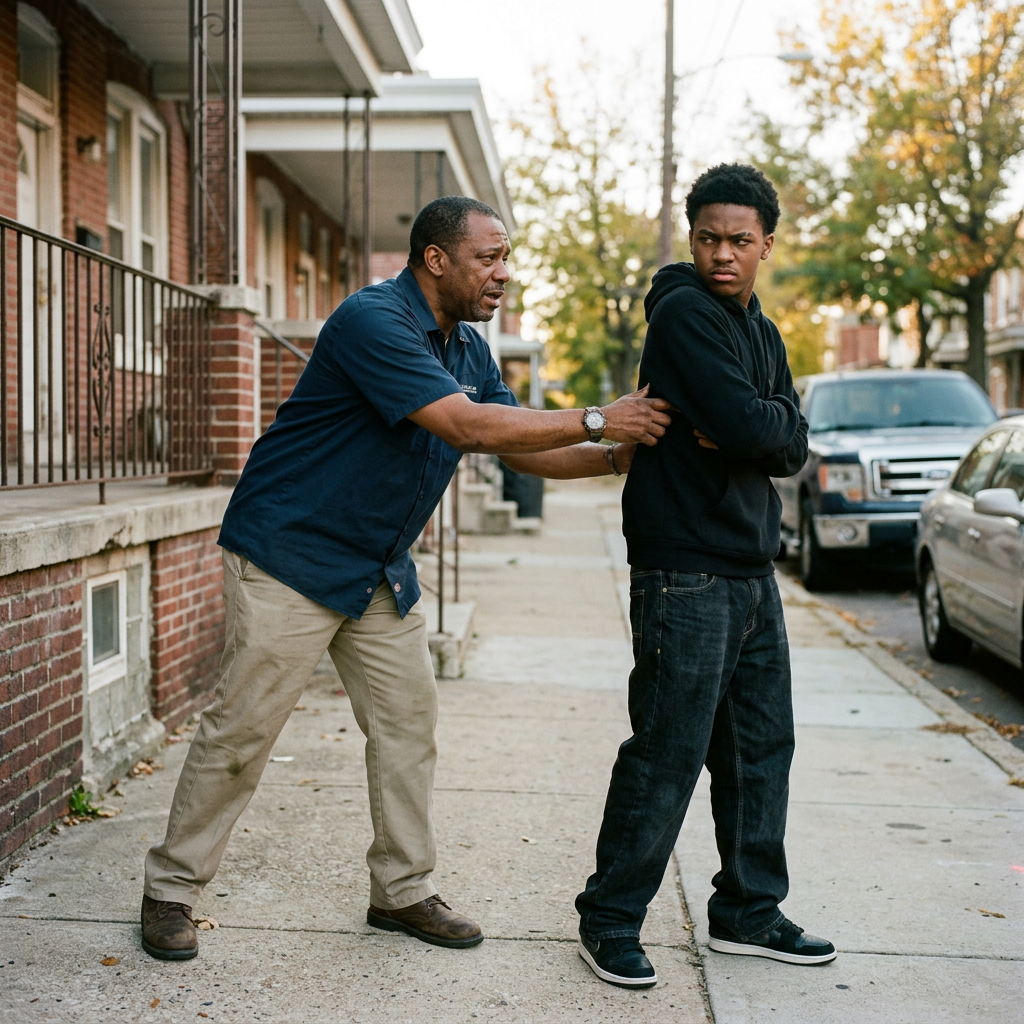
At twenty-two, Jamal was drowning. He was caught up in the streets, running with a crew that traded in violence, and battling a severe opioid addiction that had hollowed out his cheeks and dimmed the bright, intelligent eyes David remembered from his childhood. Every conversation between them ended in shouting matches, slammed doors, and shattered glass. Their relationship felt entirely unrepairable.
David buried his face in his calloused hands. Where did I go wrong? he thought. He had worked double shifts at the plant to keep a roof over Jamal’s head. He had provided. But as he sat in the silence, a painful truth began to surface: providing wasn’t the same as parenting.
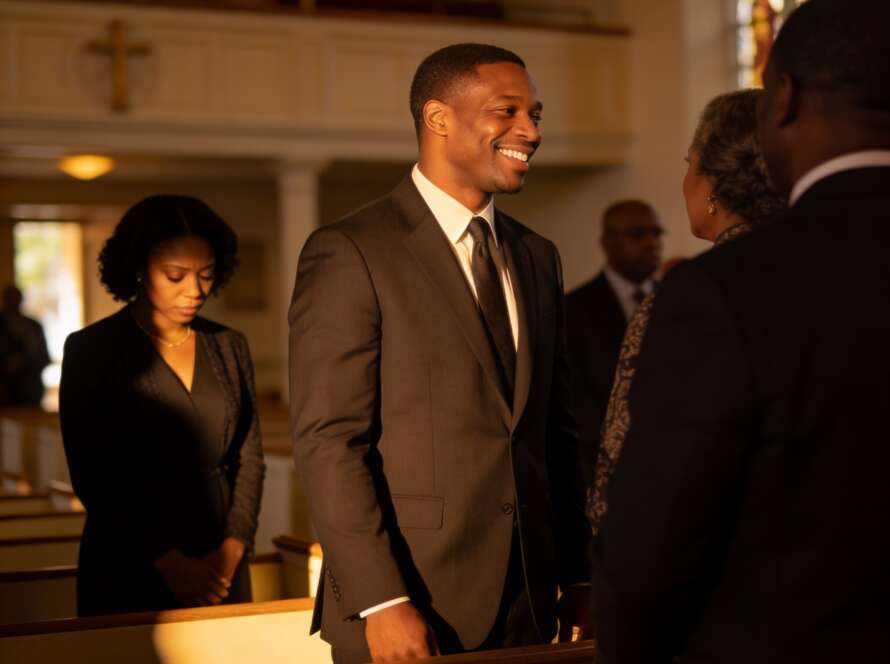
The breakthrough had come two weeks prior at his church, Grace Fellowship. After a particularly heavy Sunday service, David had broken down in the sanctuary. Brother Eli and Sister Clara, an older, deeply spiritual couple who had been married for forty years, found him weeping in the pew. They didn’t offer him clichés; they offered him their time, inviting him to their home for dinner.
Sitting at their dining table, Eli had looked David in the eye and asked a question that pierced his soul: “David, who taught you how to be a father?”
David had frozen. His mind flashed back to his own father—a hard, distant man who spoke in grunts and disciplined with a heavy hand. His father had never hugged him, never told him he loved him, and certainly never taught him how to be a loving husband or a nurturing dad.
“You can’t pour from an empty cup, son,” Sister Clara had said gently, placing a warm hand over his. “You gave Jamal what your father gave you: survival. But God calls us to give our children more than survival. He calls us to give them love.”
Eli had opened his worn, leather-bound Bible to Ephesians 6:4: “Fathers, do not provoke your children to anger, but bring them up in the discipline and instruction of the Lord.”
“Your anger with Jamal is just your own unhealed pain,” Eli explained. “You have to forgive your father for what he didn’t know how to give you. And you have to forgive yourself for passing that same drought down to your boy. Ephesians 4:32 tells us to ‘be kind and compassionate to one another, forgiving each other, just as in Christ God forgave you.’ The chain breaks with forgiveness, David.”
For weeks, David prayed through the tears. He processed the deep, aching void of growing up without a father’s tender love. He forgave the old man, who had passed away a decade ago, realizing his father was just a product of his own broken generation. And slowly, by the grace of God, David forgave himself.
Now, at 3:45 AM, the front door finally clicked open.
Jamal stumbled in, smelling of cheap blunt smoke and the metallic tang of the streets. He looked exhausted, his posture defensive the moment he saw his father sitting in the armchair. Jamal braced himself for the usual yelling. He tightened his jaw, ready to fight.
But David didn’t yell. He didn’t stand up and point a finger. Instead, he patted the sofa cushion across from him.
“Sit down, son,” David said. His voice was soft, stripped of its usual armor.
Jamal blinked, confused. “Pops, I’m tired. I don’t want a lecture tonight.”
“No lecture,” David replied. “Just a conversation. Please.”
Hesitantly, Jamal sank into the sofa, keeping his distance.
David leaned forward, resting his elbows on his knees. He looked at his son—really looked at him—seeing past the hardened street persona to the frightened, addicted boy underneath.
“Jamal, I owe you an apology,” David began, his voice trembling slightly.
Jamal’s head snapped up. “What?”
“I’ve been angry at you for the choices you’re making, the drugs, the guys you’re running with. But I realized something recently. I never taught you how to be a man. I never taught you how to love, or how to handle your pain, because… because my daddy never taught me.”
Tears welled in David’s eyes, spilling over onto his cheeks. Jamal stared at him, entirely disarmed. He had never seen his father cry.
“My father was a hard man,” David continued. “He put food on the table, but he never gave me his heart. When you were born, I swore I’d be different. But I didn’t know how. I just worked, and I yelled, and I expected you to figure it out. I provoked you to anger, just like the scripture says not to. I left a hole in your heart, Jamal, and I know you’ve been trying to fill it with the streets and the pills. I am so, so sorry.”
The room fell dead silent. The heavy, defensive walls Jamal had built around himself began to crack. His chin quivered, and suddenly, the tough exterior melted away. Jamal buried his face in his hands and began to sob—deep, gut-wrenching cries of a boy who just wanted his father.
David stood up, crossed the space between them, and did something he hadn’t done since Jamal was a toddler. He wrapped his arms around his son and pulled him into a tight, fierce embrace.
“I’ve got you,” David whispered into his son’s shoulder. “I’m not giving up on you. We are going to fight this addiction together. We’re going to get you clean. I want to be the father to you that I never had.”
Jamal gripped his father’s shirt, weeping into his chest. “I’m so tired, Pops. I’m so tired of this life. I don’t know how to stop.”
“You don’t have to do it alone,” David said, pulling back just enough to look his son in the eyes. “I’ve been trying to fix this family on my own strength, and I failed. We need help. Malachi 4:6 says that God will ‘turn the hearts of the parents to their children, and the hearts of the children to their parents.’ He’s doing that right now, Jamal. But we need Him to lead us the rest of the way.”
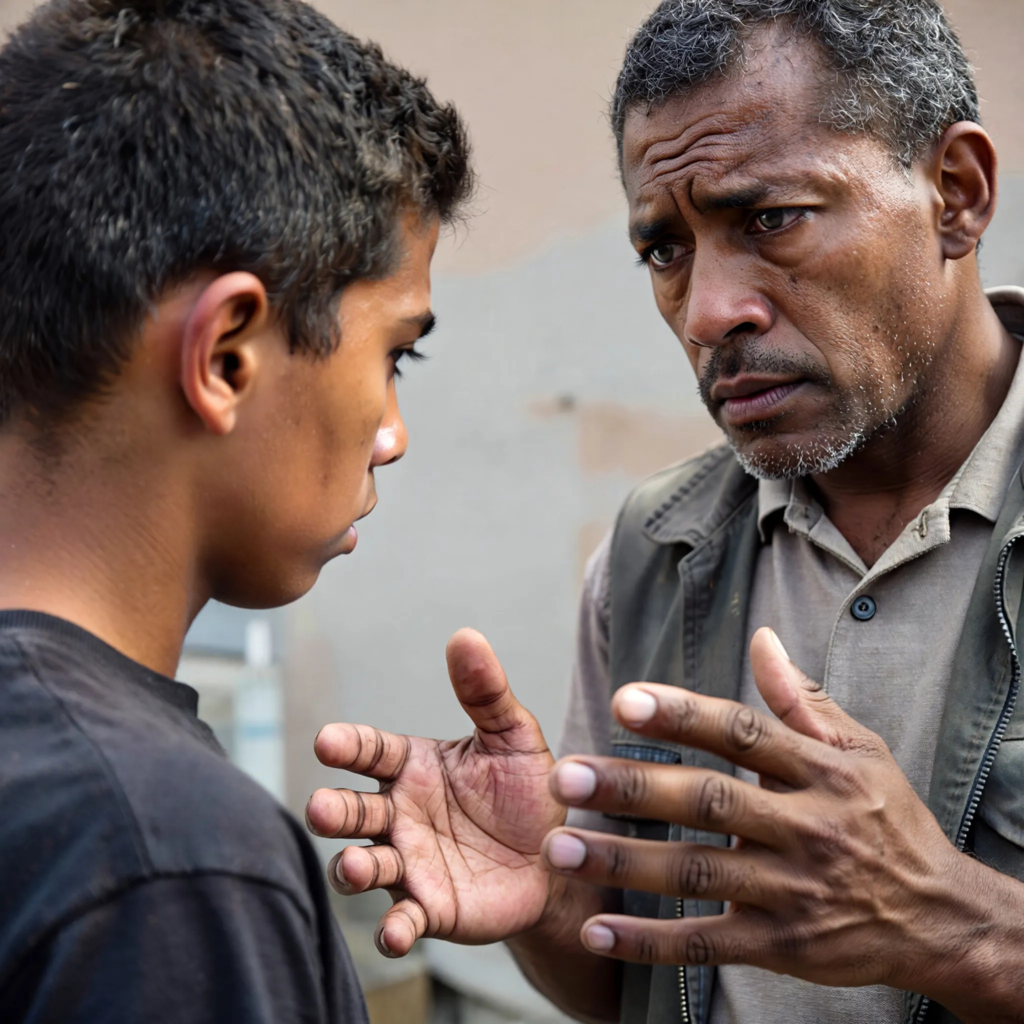
David reached out and took both of Jamal’s trembling hands in his own.
“James 5:16 says to confess your sins to each other and pray for each other so that you may be healed,” David said softly. “I’ve confessed mine to you. Will you pray with me, son? Let’s ask God to heal us. Both of us.”
Jamal looked at his father’s hands holding his. For the first time in years, he didn’t feel the urge to run. He nodded slowly, tears still tracking through the dust on his face.
Right there in the living room, at four in the morning, the two men bowed their heads. David began to pray, his voice echoing with a new, quiet strength. It wasn’t a prayer of condemnation, but of surrender. It was the sound of generational chains breaking, and the beautiful, messy beginning of a father and son finding their way home.
6/6